By Jordan EllisReviewed by the DUI Lawyer Toronto defence teamUpdated 5 min read
If you’ve been charged with or convicted of a DUI in Ontario, you’ve probably heard the term “Ignition Interlock Program”. When facing charges, you are dealing with enough uncertainty already, so get to know exactly what this program involves and what’s at stake if you don’t follow the rules.
Ontario’s Ignition Interlock Program
It is a mandatory condition for getting your driver’s license back after a DUI-related conviction or certain administrative suspensions. In short, before you can drive again, the province requires that any vehicle you operate be fitted with a breathalyzer device that prevents it from starting if it detects alcohol on your breath. Our guide on licence reinstatement after a DUI shows where the interlock fits among the other steps.
Think of it as a built-in sobriety checkpoint every single time you get behind the wheel. The Ministry of Transportation Ontario (MTO) manages the program, and approved private service providers install, calibrate, monitor and maintain the devices.
Who Has to Participate
You must join the program if you fall into either of these categories:
- Convicted of a DUI-related criminal charge under the Criminal Code of Canada, starting with a first offence DUI
- Received three administrative licence suspensions (known as “warn range” suspensions, for blowing a BAC between 0.05 and 0.08) within a 10-year period
The program isn’t optional, it’s a legal requirement before the province will reinstate your licence.
Ignition Interlock Term Duration
The length of time you’ll be required to drive with an interlock device depends on how many DUI-related offences you have on your record.
| Offence type | Minimum interlock term |
|---|---|
| Administrative suspension violations | 6 months |
| First-time DUI conviction | 1 year |
| Second-time DUI conviction | 3 years |
| Third-time conviction (after a 10-year licence suspension) | 6 years |
Note that these are minimum terms. A second offence DUI triples the term to three years, and for third-time DUI offences, installation comes only after a minimum 10-year licence suspension. Violations during the program can extend them significantly.

How the Ignition Interlock Device Works
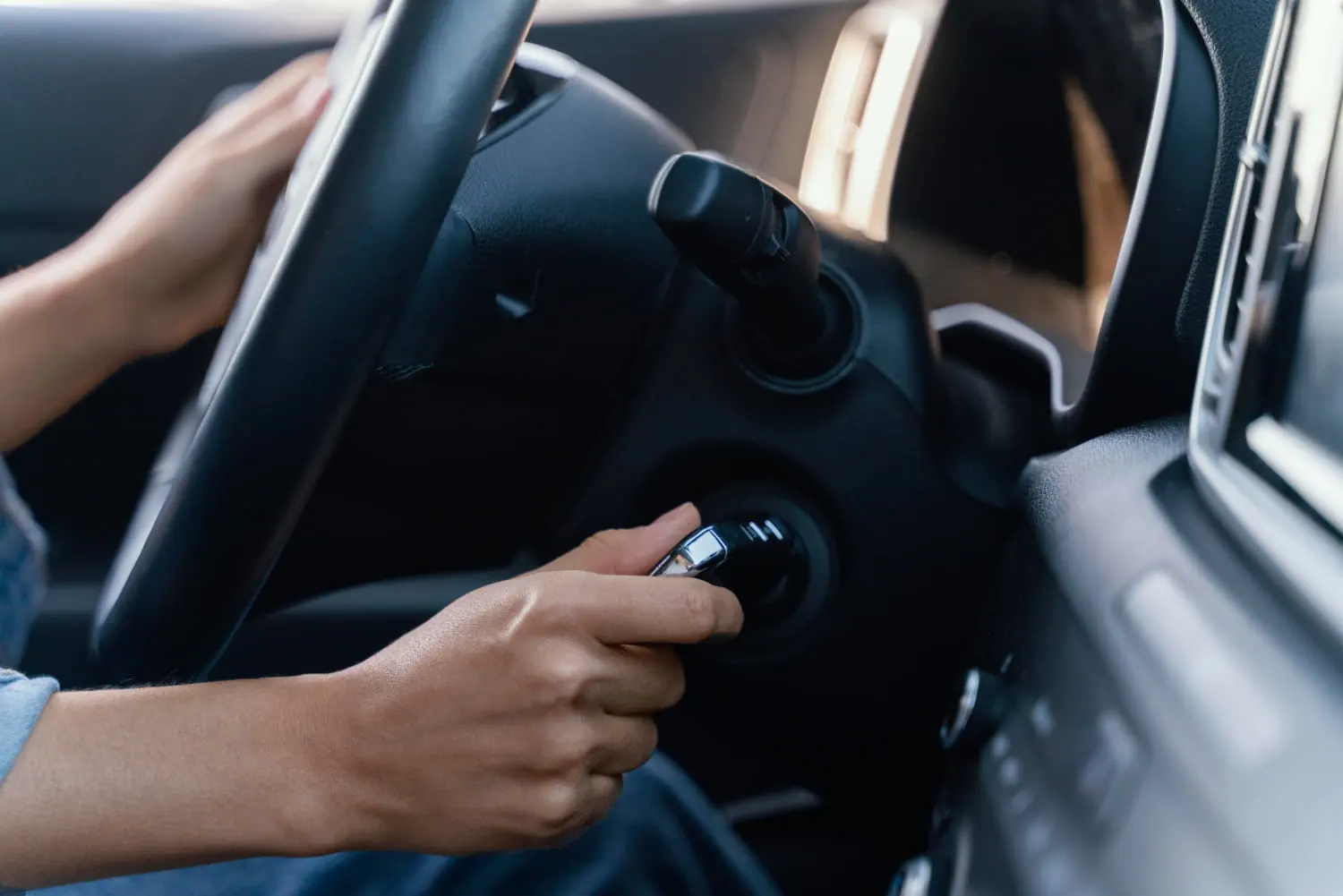
The device itself is essentially an in-car breathalyzer, hardwired to your vehicle’s ignition system. In order to start the vehicle, you blow into the device before starting the engine. If your breath registers a blood alcohol concentration (BAC) of 0.02 or higher, that’s just 20 mg of alcohol per 100 ml of blood, the car will not start. Zero drinks means zero problems.
While driving, the device doesn’t just test you once. It randomly requests breath samples while you’re on the road to ensure you haven’t been drinking after starting the car. If you fail or refuse a test, the vehicle’s lights and horn will activate in an alarm-like manner, continuing until you pull over and turn off the ignition. There is no way to just ignore it.
Ignition Device Usage Rules
The program comes with strict conditions. Violating any of them can result in expulsion from the program and a re-suspension of your licence:
- Driving a vehicle that is not equipped with an approved interlock device
- Failing to install an approved device within 30 days of conditional licence reinstatement
- Tampering with or uninstalling the device
- Missing a scheduled service appointment with your interlock provider
- Committing any further impaired driving-related offence
For those on the Reduced Suspension program specifically, the MTO conducts periodic performance reviews. If the device data shows that you attempted to start the vehicle with a BAC over 0.02, the MTO automatically extends your program term by at least 3 months, even if the car didn’t start. Missing a review can trigger the same penalty.

Ignition Interlock Program Cost
All costs associated with the device, installation, removal, calibration, are your responsibility. Depending on your service provider and the type of vehicle, you can expect to pay:
- Approximately $1,500 per year at the lower end
- Over $2,200 per year at the higher end
Over a multi-year term, this adds up to a substantial out-of-pocket expense on top of fines, legal fees, and any other penalties you’ve already paid.
Other DUI Penalties
Participation in the Ignition Interlock Program doesn’t happen in isolation. Before the province reinstates your licence with an interlock designation, you must complete every other condition of your sentence, which typically include:
- Serving the mandatory licence suspension period
- Undergoing a mandatory medical evaluation
- Paying a minimum fine of $1,000
- Serving any jail time imposed by the court
- Completing Ontario’s Back on Track education and treatment program
Only once you fulfil all of these will the province reinstate your licence, with the interlock condition attached.
Reducing Licence Suspension
Yes, and this is one of the more important things to understand about the program. Ontario offers a Reduced Suspension with Ignition Interlock Conduct Review Program, which allows eligible offenders to shorten their mandatory suspension period in exchange for entering the interlock program earlier. Here’s how it works:
- First-time offenders who plead guilty within the designated timeframe can reduce their one-year licence suspension to just three months.
- Second-time offenders who plead guilty may be able to reduce their three-year suspension to nine months.
- First-time offenders who do not plead guilty may still be eligible for a six-month reduction of their suspension, though the approval conditions are stricter and depend on the court’s sentence upon conviction.
Consult our Toronto team before deciding whether to plead guilty, and read about when an early plea may make sense first. What seems like a shortcut can have long-term consequences that far outweigh a shorter suspension.
Conclusion
The Ignition Interlock Program demands compliance on every single drive, logs every misstep, and doesn’t forgive missed appointments or failed tests lightly. The choices you make early in the legal process have the greatest impact on whether you will have to install an interlock, so it’s best to get legal help as quickly as you can. Interlock questions come up in every courthouse we attend; our Markham page covers licence, interlock and travel after a conviction, and our page for Thornhill drivers explains what happens to your licence after a charge there.
Common questions
Can I drive someone else's car while I'm on the Ignition Interlock Program?
No, while your interlock condition is active, you are prohibited from driving any vehicle that is not equipped with an approved interlock device, regardless of who owns it. Getting caught behind the wheel of an unequipped vehicle will extend both your licence suspension and your interlock term.
What happens if I fail an ignition interlock breath test?
If your BAC registers at 0.02 or higher, the vehicle simply won't start. If you fail a rolling retest while already driving, the device will trigger the vehicle's lights and horn as an alert until you safely pull over and shut off the engine. Repeated failures are logged and reported to the MTO, and may result in your program term being extended.
Does the ignition interlock device record everything?
Yes, it continuously logs all breath test results, start attempts, failures, and any missed rolling retests. This data is reviewed by your service provider and reported to the MTO during performance reviews. There is no hiding a failed test, the record is automatic and permanent.
What is the BAC limit for the ignition interlock device in Ontario?
The device is set to a BAC threshold of 0.02, equivalent to 20 mg of alcohol per 100 ml of blood. This is significantly lower than the legal driving limit of 0.08, meaning even a small amount of alcohol will prevent the vehicle from starting.
What is the Back on Track program, and do I have to complete it before getting an interlock device?
Back on Track is Ontario's mandatory education and treatment program for drivers convicted of DUI offences. It consists of an assessment and either an education or treatment stream, depending on your results. You must complete the Back on Track assessment before your licence can be reinstated with the interlock designation, so yes, it comes before the interlock device, not alongside it.